
❌ Why Booking.com, Hostelworld and other platforms don’t work
Websites like Booking.com, Hostelworld, Agoda, Expedia, and most major booking platforms do not support reservations in Syria due to international sanctions and payment limitations.
It’s not a glitch, they legally and technically cannot offer services there.
This means travellers book accommodation directly, using local Syrian platforms. Using a VPN won’t change anything, I tried. Even with different locations and IPs, global booking platforms still block Syria entirely. The restriction is on their side, not on the user’s side, so no workaround helps.
✅ Best method: booking through local Syrian websites
The most reliable option is to use local booking sites that operate normally inside Syria.
Recommended website: HalaSyria
I personally used this website. The reservation was confirmed quickly, and everything was respected at the hotel.
At check‑in you usually only need your passport. Hotels don’t ask for anything complicated, they just register your stay in their system. It takes 1 – 2 minutes.
Price difference
I paid 40 USD, but when I arrived, I noticed the price at reception was 35 USD. Most likely the extra 5 USD is a booking fee, which is completely normal.
Even so, I highly recommend having a reservation, it makes the border process smoother and looks more official.
❔What if you arrive in Damascus without a hotel booked?
Don’t worry, Damascus is full of hotels, especially in the central area. If you don’t have anything reserved, just head to this part of the city and you’ll be completely fine. Google Earth link of the spot.
Here. There are many hotels next to each other, honestly, if you turn around once, you’ll probably spot five or six immediately. You can easily tell from the signs whether a place is more budget‑friendly or more upscale.
Prices can start from around 20 USD per night, so it’s very possible to find something affordable on the spot.
The area also has currency exchange office, ATMs, cafés, shops, taxis, and everything you might need. It’s a very central and convenient location, so even without a booking you won’t be stuck.
There are also many hotels around the Umayyad Mosque (the Great Mosque of Damascus), hidden in those narrow, atmospheric streets. It’s a great area to walk around, you’ll spot plenty of places just by wandering a bit. The hotels are close to each other, easy to compare, and you can quickly see from the signs whether they’re budget or more upscale.
If you arrive late in the evening, just keep in mind that many streets in Damascus are not well‑lit at night. It can feel very dark, but it doesn’t mean the area is unsafe, it’s simply how the city works. Hotels in the central area are still open, and staff are usually available, but it’s better to know in advance that the streets themselves may look very quiet after dark.
Staying near the Umayyad Mosque or in the Old City area is ideal. everything is walkable, safe, and full of cafés, shops, and taxis.
🗺️ Using Maps.me (free app) to find hotels
If you arrive without a reservation, Maps.me (free app) is super helpful. All the hotels in Damascus are marked there with their names, so you can easily check what’s around you.
You can also try googling the hotel names and contacting them via WhatsApp, I tried a few this way, but the replies I got were around 100 USD per night, which was way too expensive for me. That’s why I ended up using the website I mentioned earlier, and it worked perfectly.
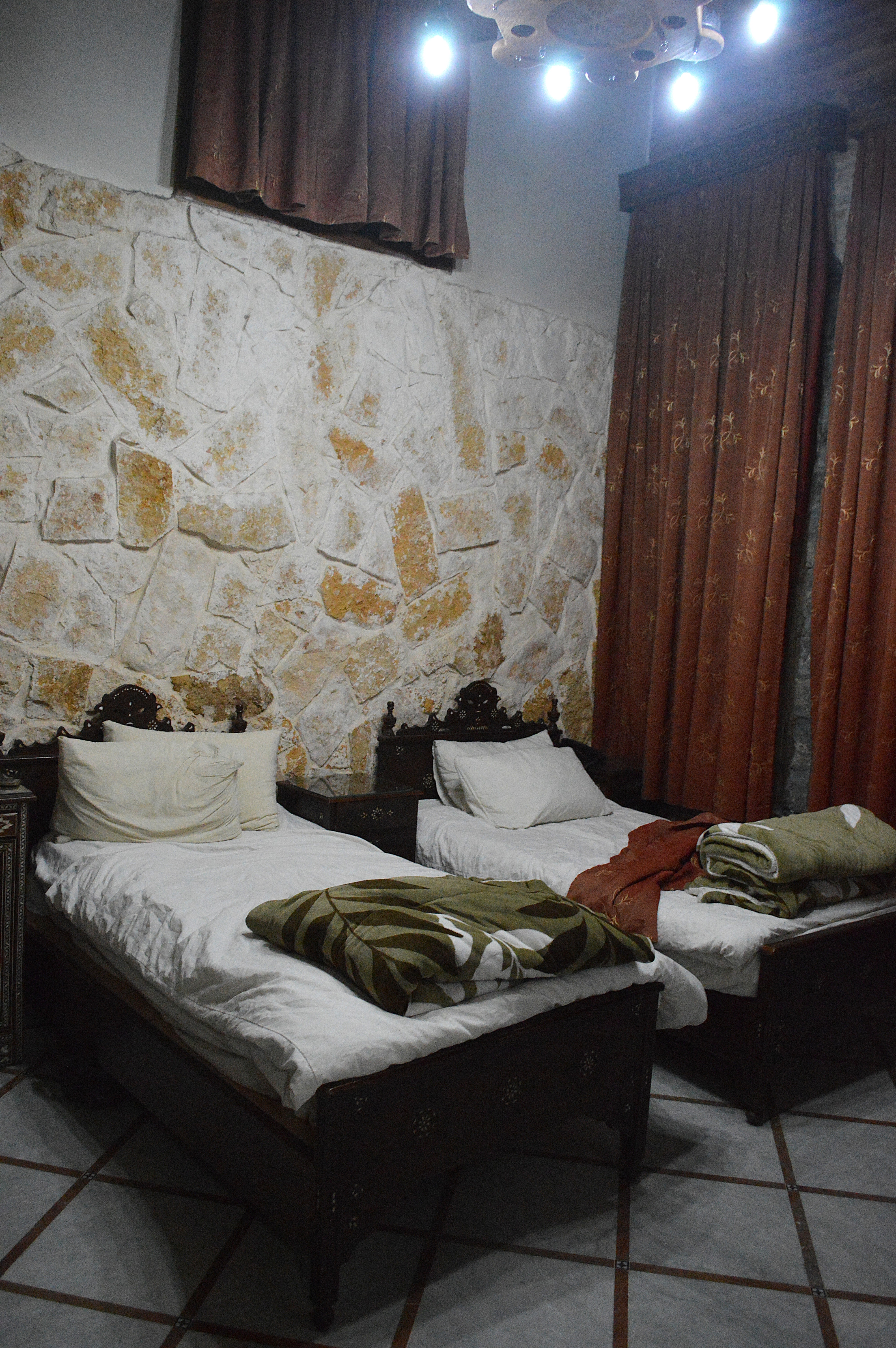
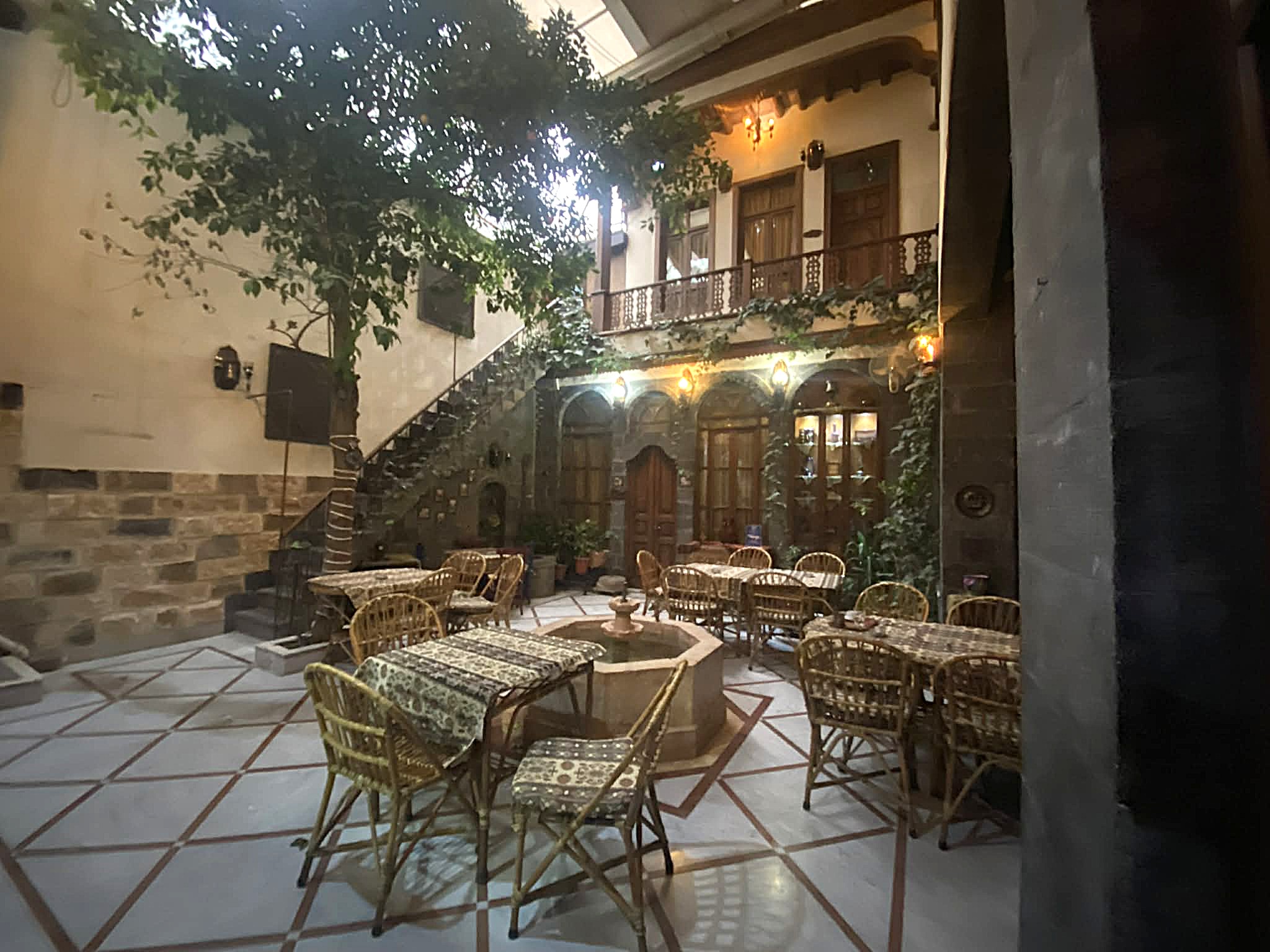
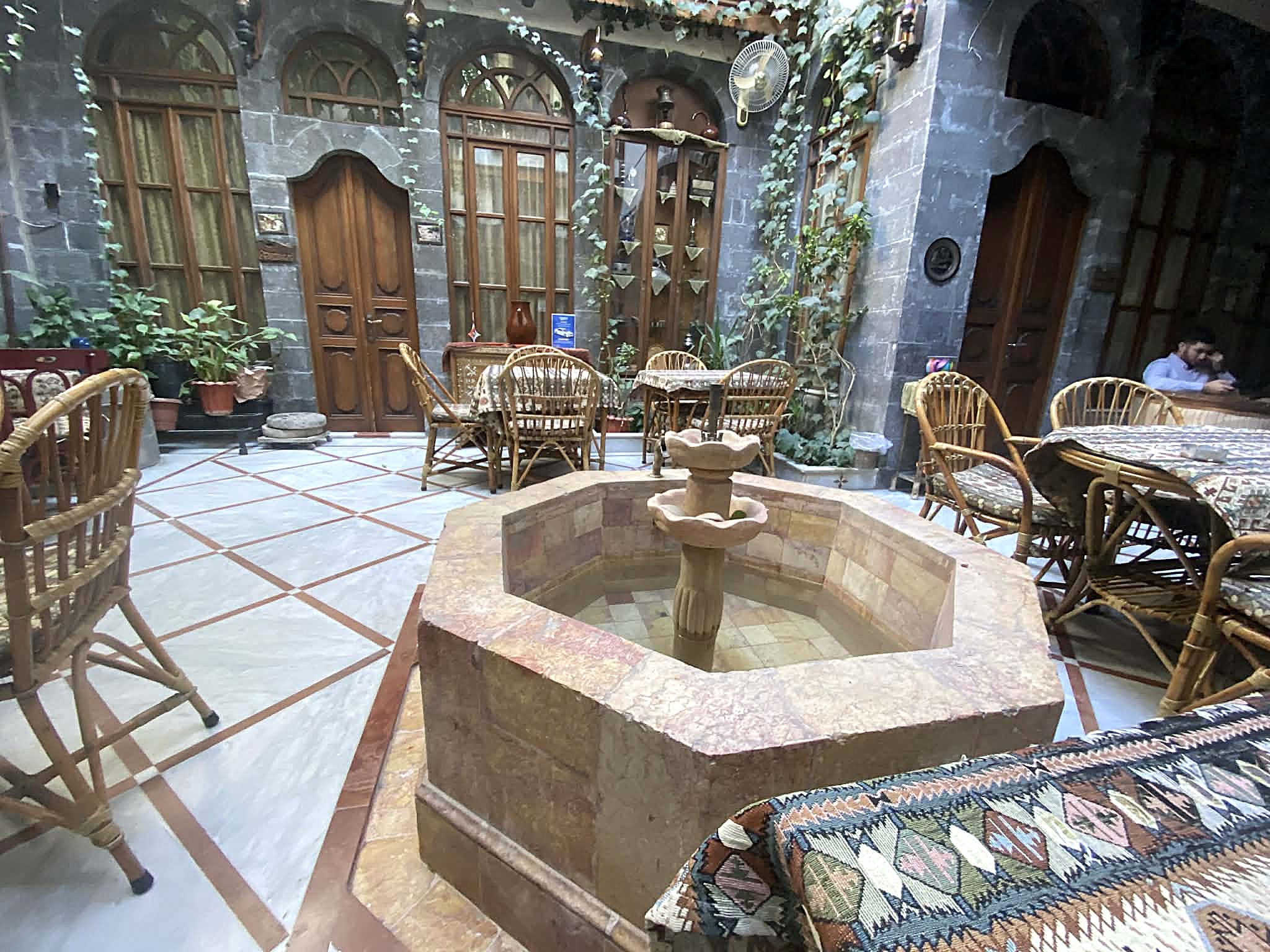
My hotel: Shahryar Hotel Damascus
I stayed at Shahryar Hotel Damascus, (right here on mapps me) (approx here on google map) in the heart of the old city. It’s truly beautiful, almost like a small palace, with that magical Damascus atmosphere everywhere around.
The man at the reception was incredibly kind and helpful (I didn’t ask for his name, unfortunately), but he made my stay even better with how warm and welcoming he was.
Sending warm greetings to the whole team there. 🙂

 Solo female traveller
Dear wandering wonder Anna,
I have no words to appreciate you. I really feel like leave everything behind here and start travelling, holding the end of the veil that carries you, veil of knowledge & experience. One day sure.. Happy new year once again. 🙏❤️❤️❤️
LikeLiked by 4 people
Thank you so much, Raj. Your words always carry such warmth and poetry, they truly mean a lot to me. Traveling has taught me so much, and I’m grateful if even a small part of that inspires someone else. I hope the new year brings you beautiful moments, new discoveries, and the courage to follow whatever path calls you. Sending my best wishes your way. ❤️❤️❤️
LikeLiked by 1 person
Take me with you !
Only that strong appeal to you !
❤️❤️🌷🌷
LikeLiked by 1 person
Dear Raj,
Traveling has been one of the greatest teachers in my life; it opened doors to perspectives I never imagined and reminded me how vast and beautiful the world is. By the way, I’m curious,what is your dream destination? If you could pack your bags tomorrow and go anywhere in the world, where would it be? Warm regards 🌍✨
LikeLiked by 1 person
Of course I want to go to ancestral place of my grandfather. 🙏🌷❤️
LikeLiked by 1 person
Anna
Urgent request
This fellow Mockerer always changes persons to disturb. I cannot put his comment under spam because below here he has responded to me under my comment to you. Please put his long irrelevant, offending (not related to our conversation) comment under spam and delete it permanently.
Regards,
LikeLiked by 2 people
Dear Anna please put that Mockrer comment as spam & delete
LikeLiked by 1 person
Wow, that sounds amazing! Visiting a place connected to your family’s history must be such a meaningful experience. Is this in India? Have you had the chance to go there yet, or is it still a dream for the future? 😊
LikeLiked by 1 person
Yes it is in India. My father couldn’t go due to family responsibilities. Just suffixed place name to his surname (we don’t do it, new India does not allow long non registered names with no legal record) but never went there even though it was not long away. I couldn’t go for the same reason. At least I want to go. Did you put him under spam ?
LikeLiked by 1 person
Thank you for sharing that, it sounds meaningful in a very personal way.
And yes, it was marked as spam and permanently deleted. WordPress really should put him on my spam list now.
LikeLiked by 1 person
Very well done 👍
LikeLiked by 1 person
I had Wonder Woman movie reference in my mind
LikeLiked by 2 people
This is such an amazing trip: bold, and something I sure wish I could experience. I read an excellent book about Lawrence of Arabia, and how Damascus was described… I hope one day its glory is restored. Wishing you wonderful (and safe 😊) travels in 2026.
LikeLiked by 2 people
Thank you so much for your thoughtful comment. Damascus is one of those places that stays with you. I, too, hope it will be restored one day, for its people and for the world. Wishing you amazing travels as well in 2026!!
LikeLiked by 1 person
An excellent guide for Syria’s hotels, Anna, with great detail. The Shahryar looks very comfortable.
LikeLiked by 3 people
Indeed, it was great, the staff was so helpful, the guy from reception even came to pick me up because the directions to get there were difficult. They really made me feel welcome, and the atmosphere of the place was even better than I expected. Thank you, Nilla, for your comment!
LikeLiked by 2 people