
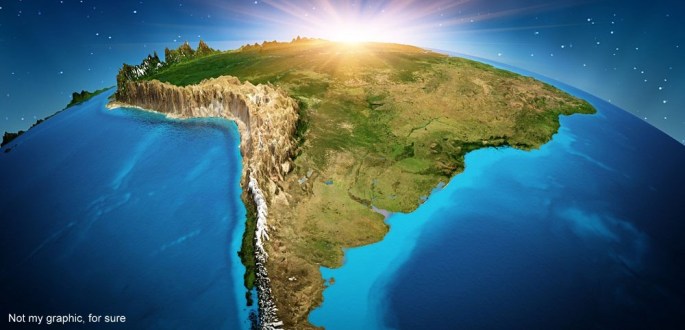
It took me 4 months to save money and to plan my backpacking trip around South America. Being busy earning cash for my travel, I was also occupied thinking about packing, researching visas issues, planning my route and budget. It really is not so complicated, but it was my first backpacking trip in my life, and I did not have any friends that done it before, who could help me with some tips, to share some experience. I had to heavily rely on internet info and other blog posts to prepare. Yet, I still think there is not that much information about it. Here, I will share with you some knowledge about places I have visited, how I was getting from A to B, my budget, packing and some other tips.
Planning your route
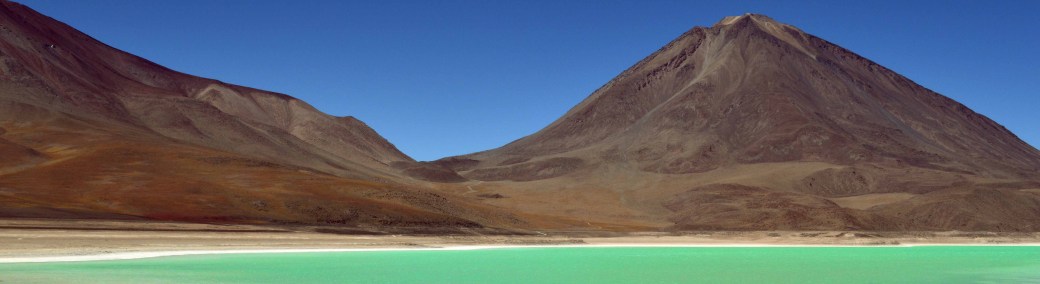
I have to admit that I am very proud of my path. I have visited all major attractions (like Iguazu Falls, Atacama Desert, Salar de Uyuni, Machu Picchu, Titicaca Lake, Dead Road), and I stayed in really amazing places. The only thing I haven’t seen was Angels Falls, as my plane from Bogotá to Caracas, in Venezuela, got cancelled, so I decided just to skip this one. Now, I am thinking that I shouldn’t. Venezuela is truly beautiful, and you can see Amazon from there as well. Basically, I did not plan my whole way around SA back home. I did only think that I will try to visit all countries on this continent, and I set major things I want to see, then I was building my expected way around these places. I think I did well at the end, as I saw 9 countries in total. I booked my hostels/hotels only in 3 first locations, and I planed my route only in the country I started from, Brazil. Then after everything was natural, I was planning my way on weekly basis, changing my mind from time to time. Everything turned out pretty well, and I do highly recommend to fallow my way, but not staying as long in Florianopolis, Santiago and Montanita, as you can add some extra locations to your trip, in Paraguay for example, or just adding Venezuela at the end. I think 6 days is an absolute maximum to stay in one place.


Please note, that real-life vikitravel can be found in every hostel`s kitchen, since there is loads of other backpackers to share their experience and recommend great places to see. Always worth listen and talking to them!
Brazil: Sao Paulo (3 nights) – Florianopolis (8 nights) – Foz do Iguaçu (4 nights) – Paraguay: Ciudad del Este (1 day) – Argentina: Buenos Aires (6 nights) – Uruguay: Colonia del Sacramento (1 day) – Argentina: Mendoza (2 nights) – Chile: Santiago (11 nights) – Valparaiso (1 day) – Vina del Mar (1 day) – San Pedro de Atacama (6 nights) – Bolivia: 3 days trip via desert from San Pedro to Uyuni – Uyuni (3 nights) – Potosi (6 nights) – Sucre (6 nights) – Cochabamba (3 nights) – La Paz (4 nights) – Copacabana (2 nights) – Peru: Puno (3 nights) – Cuzco (4 nights) – Aquas Qalientes, Machu Picchu ( 1 night) – Cuzco (2 nights) – Lima (3 nights) – Mancora (6 nights) – Ecuador: Guayaquil (1 night) – Montanita (10 nights) – Banos (4 nights) – Quito (3 nights) – Colombia: Cali (6 nights) – Bogota (7 nights).
Transport
I traveled around South America only by bus. Just once I used a ferry from Buenos Aires to Uruguay. There are loads of bus companies to choose from in every single country, offering different comfort (except in Bolivia) from normal to fully recline chairs with hot meals served onboard. Mostly possible to book online in advance, again, except Bolivia. Flying is very expensive and a bit pointless while backpacking. Train is an option too, especially now is getting more and more popular, but since I have not used it even once, I can not advise you on this service. I found this blog to be very useful for people who want to travel by train. For bus prices in each country you can have a look at my other post here. Regarding buses, they are very comfortable, except Bolivia (most amazing country anyway), and mostly affordable, except Argentina, Brazil and Chile.
I am afraid missing bags from the storage space under the bus are very common, thought nothing like that happened to me, other travelers, I have met, experienced it. There is nothing you can do about it, just hope that it wont happened to you. Always keep all valuable stuff in a small bag pack with you in the bus, try not to have expensive gear, clothes and shoes, not to miss it too much, just in case.


Border crossing
As a Polish nation, I do not need any visa for any country in South America. There is no fee to pay too, not even a tax (that you pay sometimes in Central America). That is for most of the European countries, even England, Germany and France. Border crossing was always nice and smooth for me, with no any hassle, trouble or any major issues. Actually, border personnel was always extra nice and very interested in me, probably due to the fact that not so many polish people travel in that part of the world. Blond hair and green eyes helped too, I guess. Just queuing for the stamp out/stamp in was annoying sometimes (especially at night). Please note that basic Spanish is essential, as they may ask where you are going to stay, or what is your occupation. It can be also a great time to eat, as there are always loads of food stands around to choose from (not between Mendoza, Argentina-Santiago, Chile). Bus driver always wait for everyone and count passengers to be sure all are in, before continuing journey, unless he doesn’t give a damn about it..nah joking, usually he does. Don`t try to smuggle anything, sniffing dogs are present at every border, and in Colombia, even on any route to stop the bus and search bags and passengers. Thought, I did not have any problems at the border, I’ve heard some stories from male travelers that were experiencing some problems, or being asked to pay a fee, that, of course, wasn’t required.
Budget
For the 4 months of traveling, excluding flying to this continent from Europe, I have spent approx 6.800$, that including everything, staying 70% of the time in hostels, rest in hotels, all the bus travel, food, trips, activities, tickets, parties, clothes, souvenirs…. Please keep checking fly4free website for cheap deals on flights to South America. I bought mine from Belgium to Sao Paulo in Brazil with return for 650$, but can get even cheaper than that. Here is my other blog post, where I look in to prices of each country with estimated daily budget.


Health insurance
Absolutely essential and one of the most important things before traveling. Can be easily purchase online, and is very affordable. You can buy it just day before your departure, and the price will be still the same. If you are not planning anything like surfing, winter-sports, just buy the cheapest one to cover medical bills. Otherwise, if you have some crazy plans, read what your insurance will cover, trust me, I am a lawyer. No point to buy an extra option for electronic losses (phones, tablets, laptops..etc), unless, of course, it is a very good and expensive policy. My friend had her staff covered, and after being theft from her expensive Nikon camera, got 35$ as of insurance for it! Medical cover is the most essential one for a backpacker. I bought mine for around 120$ for 6 months of my travel.
Safety
Just go. Safety is your last thing to worry about before backpacking. People are mostly travel alone now anyway, especially in South America. It is a very safe place, even for solo females, like myself. Just be intelligent and don’t act stupidly (walking alone at night, going out with strangers….etc).
Apps
Maps.me is the most important application. Please don’t take a fancy phone with you, unless you can afford losing it, but good smart phone that runs this app smoothly is essential. Old samsung s series are probably the best. I say it, as I was robbed in Chile, losing my camera, tablet and good glasses, so I experienced it myself. Coming back to maps.me, it is an application that allows you to store and later use maps without wifi. You will be even able to use navigation that will show you your location and directions (no wifi needed, as it runs on GPS). I have to say, I was impresses, as GPS was working for me even high in Bolivian mountains, just almost everywhere, and always in cities and town. Apart from street names, there are almost all hostels, hotels, shops, places of interest, all public offices (post office, police, etc). You gonna use it a lot, like I did. App is free of charge.
Other app I used was booking.com, but please note, booking in advance is more expensive than just good old way of turning at the hostel doors and checking in.
Flickr app is great too. It upload all your photos from your phone automatically (once connected to the internet, just turning the app on), so you are avoiding losing them with your phone. Free app again, but just need to create an account (that is free too).
Kindle/ebook/app to read ebooks is essential for every book lover, like myself.
Packing
Hmm, it is a very good question. I can just give you a few tips, I found to be useful during all my backpacking trips:
- Less is more! First and most important. Do not take much with you, take half what you are planning in the first place. Clothes are very cheap in South America, especially in Bolivia and Colombia, and by buying them you are getting an amazing souvenir too. Something special in your wardrobe, trust me. I had an umbrella, but haven’t used it even once, so pointless to take. Shoes: funny story, as planning loads of hiking, especially in Bolivia and Peru, I bought and took very expensive Timberlands – throw them to the bin already in Brazil and was just wearing converse (for all my hiking, at the beach, on snow, salt, swamps, deserts….). 2 pairs are max to take.
- Good light waterproof jacket and cover for backpack is a must. Here, I really love The North Face jackets, they just wont let you get wet!!
- For girls: hairdryer is not needed, but you may want to use it in Bolivia sometimes, as of a cold temperature. Still, not worth taking it with you, there are always females around to borrow one, if needed.
- Nova-days, we just can’t live without our smartphones, so it is very important to have an extension for the socket, as in many hostels they are far away from your bed.
- Don`t try to save money buying a cheap backpack. It is one of the most important things and your home for next months. It will be on your back for many many hours, so very good, comfortable straps are essential. It really needs to be a top quality one. I bought a cheap one, had to sewn it many times, and I’ve had wounds on my shoulders from a very bad straps. Trust me, hurt a lot! Before my next backpacking trip I bought a good one and that made a big difference.
- Apart from the shoes, I binned quickly, Lonely Planet book on South America got left in my third hotel, simply because I didn’t want to carry such a heavy guide-book, since everything I needed was online. Maybe for people staying in tents, when internet connection is not always available, might be helpful, but otherwise you will be just fine with your smart phone.
Injections
It is wildly required (according to an official info) to have a yellow fever injection and a proof of it! There are 5 more you may want to take. I did all of them, and I’ve had a little book to prove my yellow fever one. I read that you wont be able to enter without it (YF). However, in reality nobody checked it at the border…nobody, even once. But better to take them, just in case and for the peace of your mind.


Last tips
- Please, wherever you are flying to, don`t stay just one night in your first location. Your body needs to rest after a long fly and adapt to the new climate. It took me 4 days when I landed in Brazil in November from a cold Europe.
- I`ve had 50 Euros always in my purse, just in case. Cash machine is not always available. US Dollars are good too.
- When it comes to thieving and robberies, South America is a leader. Please, always keep an eye on your valuables. Do not keep your backpack behind, always on one arm on the side or on your chest. I was also tightening straps from the zip together.
- Don`t drink a tab water anywhere, unless it’s confirmed by staff in hotel/hostel or by sigh close to the tap.
- Planning to buy outstanding sweater, cardigan? Leave it for Bolivia and Peru! Best quality (especially alpaca`s wool) and price.
- Try to, if possible, have two different types of your cards. I`ve had a Visa and MasterCard, and I found that sometime just first one worked, sometimes second. My MasterCard (credit card) was definitely more acceptable.
- Your passport and your wallet is your main priority! Never leave it alone, even in a locker in hostel! You don`t even realize how easy is to open it for professional. I got robbed this way in Santiago, in Chile.
- Before departure, I gave my mother copy of my passport, insurance, injections I took, all pin numbers and account details, just in case and for peace of my mind. Please do so as well, leave it with someone you trust and memorize phone number, you newer know what might happen.
- Take 2 types (thin and thick) of padlock. Some lockers got a thin holes (to use smaller one). Don`t worry if you will forget, they are widely available to purchase almost everywhere, along with socket extensions and adapters.
- Do not panic if there is an error in a cash machine, it may not be your card, but machine might be just empty. It really is a common problem. I remember, in Buenos Aires, I’ve had to try 6 of them, before finding one with money in it.
- As a budget backpacker, always check general prices in each country. You can have a look here too. A very expensive trip on Amazon trough a rain forest from Brazil might be very cheap from Bolivia, Colombia or Venezuela.


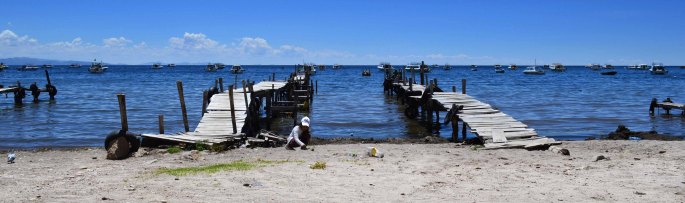


 I know it from autopsy, especially from my 6 months trip in South America. Budget was as important to me as a discovery of every possible amazing place in this colorful continent. It is not easy to find this balance, but well possible. I, myself, spend more time in Bolivia and less in Argentina, to keep my finances in place. Luckily, Bolivia became as the highlight of my journey, and I found Argentina least attractive. Mathematics and rational thinking is laughing at as at this point, as of the fact that longer you are planning to travel, the cheaper it will get. I did my backpacking in 2015-2016, but I have rechecked the recent, as of May 2017, prices, to provide you with a very current information on Argentina, Bolivia, Brazil, Chile, Colombia, Ecuador, Paraguay, Peru and Uruguay. So where do we stand with the cost? Lets have a look.


 Solo female traveller
You must be logged in to post a comment.